Click here to join now
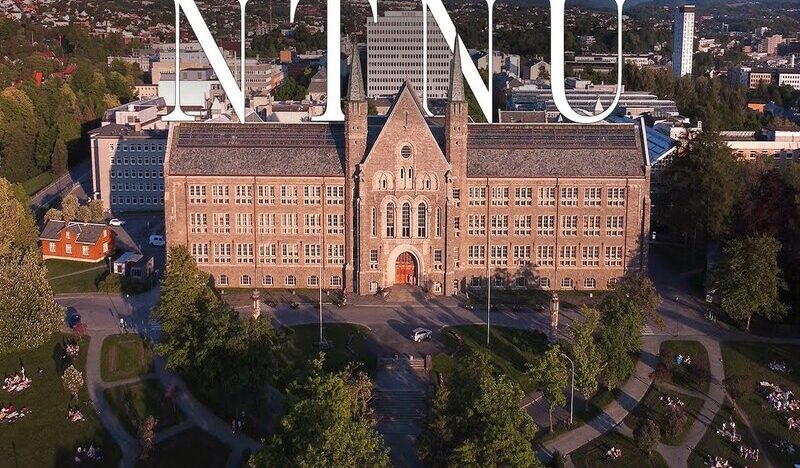
Institution: Norwegian University of Science and Technology
Location: Trondheim, Norway
Department: Department of Materials Science and Engineering
Supervisor: Associate Professor Tomáš Mánik
Deadline: 15 March 2026
Duration: 3-year fully funded PhD fellowship
Research Area: Aluminium Extrusion and Microstructure Engineering
This PhD position focuses on microstructure evolution and crystallographic texture development during extrusion of high-recycled-content aluminium alloys. The research is embedded within the SFI FAST – Future Aluminium Structures centre, a major Norwegian initiative advancing sustainable aluminium manufacturing and circular economy solutions.
The project addresses key industrial challenges in using post-consumer scrap (PCS) aluminium for structural and safety-critical applications, particularly in automotive and high-performance engineering sectors.
Core Scientific Focus
The research lies at the intersection of:
- Materials Science and Engineering
- Physical Metallurgy
- Metal Forming and Plasticity
- Aluminium Alloy Processing
- Computational Materials Modeling
- Circular Economy and Sustainable Manufacturing
The central objective is to understand and model how thermo-mechanical processing during extrusion influences microstructure, recrystallization, and texture gradients across aluminium profiles.
Key Research Themes
1. Microstructure Evolution During Extrusion
The project investigates how deformation mechanisms and recrystallization processes shape the final grain structure and crystallographic texture of extruded aluminium profiles.
2. Texture Formation and Mechanical Properties
Understanding deformation texture and recrystallization texture is essential for predicting:
- Mechanical strength
- Surface quality
- Anisotropy
- Structural reliability
3. Role of Intermetallic Particles in Scrap-Based Alloys
Special attention is given to:
- Particle-Stimulated Nucleation (PSN)
- Grain boundary pinning
- Effects of impurities from recycled aluminium
These factors significantly influence recrystallization behavior and final material performance.
4. Experimental and Computational Modelling
The candidate will combine:
- Extrusion experiments
- Advanced microstructural characterization (LOM, SEM, EBSD, TEM, P-FIB)
- Crystal plasticity modelling
- Finite Element Analysis (FEA)
- Physics-based and data-driven simulations
The goal is to develop predictive models linking processing parameters to final microstructure and properties.
Research Environment: SFI FAST – Future Aluminium Structures
The position is part of SFI FAST, a national Centre for Research-based Innovation funded by the Research Council of Norway and leading aluminium industry partners.
The centre is led by Norwegian University of Science and Technology in collaboration with SINTEF and 16 major industrial partners across the aluminium value chain.
FAST focuses on:
- Sustainable aluminium manufacturing
- Circular materials engineering
- Structural performance of recycled alloys
- Digital simulation via the FAST Virtual Lab
- Industry-integrated research and innovation
The PhD candidate will collaborate closely with academic researchers and major aluminium producers, applying research findings to real industrial use cases.
Academic Field Classification
Broad Field: Engineering and Technology
Primary Field: Materials Science and Engineering
Specialization:
- Physical Metallurgy
- Metal Forming and Plasticity
- Aluminium Alloy Processing
- Microstructure Modelling
Required Background
Applicants should hold a Master’s degree in:
- Materials Science
- Mechanical Engineering
- Applied Physics
- Related engineering discipline
Strong academic knowledge in:
- Metal forming processes
- Plasticity theory
- Crystallographic texture analysis
- Computational modelling
- Programming (Python, FORTRAN, or similar)
- Finite Element Analysis software
Salary and Employment Conditions
- 3-year full-time PhD position
- Annual gross salary: NOK 550,800
- Membership in the Norwegian Public Service Pension Fund
- Access to advanced research infrastructure and industry network
- Employment subject to NTNU PhD regulations
Summary: Which Field Does This PhD Belong To?
This PhD lies primarily in:
Materials Science and Engineering
More specifically:
Physical Metallurgy and Metal Forming of Aluminium Alloys
It combines experimental materials characterization, computational modelling, and sustainable manufacturing research, with a strong focus on circular economy and high-recycled-content aluminium for structural applications.