Click here to join now
The Norwegian University of Science and Technology (NTNU) invites applications for two fully funded PhD positions in Modelling Strength and Failure in Recycled Aluminium Alloys at the Department of Structural Engineering, based in Trondheim, Norway. These positions are part of the Centre for Research-based Innovation SFI FAST – Future Aluminium Structures and will be linked to the SIMLab (Structural Impact Laboratory) research group.
Application Deadline: March 16, 2026
Employment Duration: 3 years for doctoral work (plus 1 year career promotion work)
Proposed Start Date: August 1, 2026
About NTNU
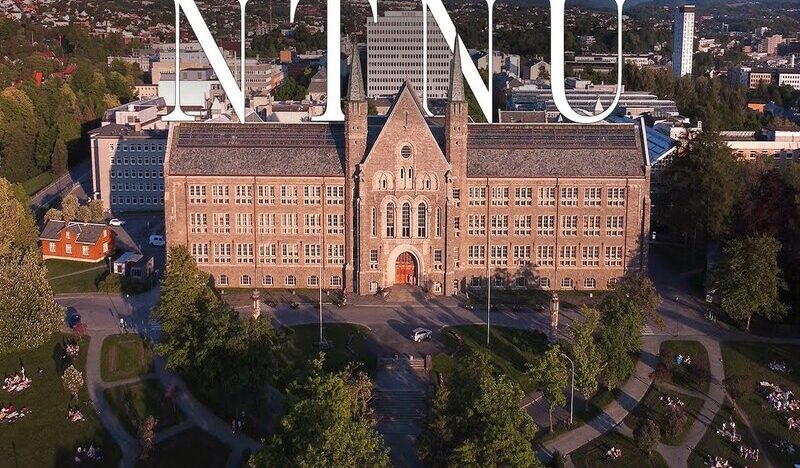
NTNU is a leading Norwegian university with a strong technical-scientific profile and a focus on professional education. The university employs around 9,000 staff and educates 43,000 students, contributing to research and innovation for societal development. Its headquarters are located in Trondheim, Norway’s technology and research hub.
About SFI FAST – Future Aluminium Structures
SFI FAST is a national Centre for Research-based Innovation funded by the Research Council of Norway and the aluminium industry. Led by NTNU in collaboration with SINTEF and 16 industrial partners, FAST runs from 2026 to 2033 and focuses on the sustainable use of post-consumer scrap (PCS) aluminium in high-value, structural, and safety-critical products.
Key goals include:
- Developing scientific knowledge and technological tools for recycled aluminium
- Creating the FAST Virtual Lab, a digital framework integrating experimental data, physics-based models, and data-driven methods
- Training over 18 PhD and postdoctoral researchers and more than 100 MSc students in advanced aluminium research
PhD Position 1: Modelling Plastic Flow and Fracture in Recycled Aluminium Alloys
This project investigates how microstructural heterogeneity in recycled aluminium alloys influences ductility, strain localization, and fracture behaviour. The candidate will combine experimental characterization and multi-scale modelling to predict material performance.
Key Responsibilities:
- Characterize microstructures using SEM/EBSD, microCT, and in situ mechanical testing
- Develop microstructure-informed models of plasticity and fracture
- Investigate the effects of particle clustering and morphology on damage evolution
- Integrate experiments and modelling to create predictive tools
Supervisor: Associate Professor David Morin
PhD Position 2: Modelling Fillet Welds in Aluminium Structures
This project focuses on understanding stiffness and failure behaviour in fillet welds, including the impact of weld geometry, alloy composition, thermal history, and recycled material variability. The candidate will combine numerical modelling and experimental characterization to improve industrial simulations.
Key Responsibilities:
- Develop improved stiffness representations for fillet welds in finite element models
- Investigate failure mechanisms, including initiation at start-stop regions
- Characterize weld properties for different alloys, processes, and recycled material
- Integrate mechanical testing, microstructural data, and thermo-mechanical modelling
- Propose modelling strategies suitable for industrial design workflows
Supervisor: Associate Professor Miguel Costas
Duties of Both Positions
- Conduct high-quality research and publish in international journals
- Collaborate with researchers and industry partners in SFI FAST
- Mentor MSc students and contribute to SIMLab activities
- Disseminate research findings to both scientific and broader audiences
Required Qualifications
- Master’s degree in solid mechanics, structural engineering, mechanical engineering, or related fields
- Strong academic record, equivalent to B or better on NTNU’s grading scale
- Eligibility for NTNU’s Faculty of Engineering Doctoral Program
- Fluency in English (spoken and written)
- Demonstrated motivation and ability to work independently and in teams
Preferred Qualifications
- Knowledge of plasticity theory and constitutive material modelling
- Experience with non-linear finite element methods (e.g., Abaqus)
- Coding skills in Python or Fortran
- Experimental work experience and data analysis
- Knowledge of aluminium alloys
Personal Competencies
Candidates should be:
- Highly motivated, curious, and enthusiastic
- Able to carry out goal-oriented and structured research
- Interested in interdisciplinary and collaborative work
- Strong communicators in both oral and written formats
- Passionate about combining theory with experimental and numerical methods
Salary and Employment Conditions
- Position Code: 1017 PhD Candidate
- Gross Annual Salary: NOK 550,800 (subject to qualifications and seniority)
- 2% statutory pension contribution deducted
- Full-time position with physical presence at NTNU
- Employment subject to State Employees Act and Norwegian export control regulations
What NTNU Offers
- Access to world-class research infrastructure at SFI FAST and SIMLab
- International and interdisciplinary research environment
- Career guidance and structured PhD training
- Open, inclusive, and collaborative workplace
- Membership in the Norwegian Public Service Pension Fund
Diversity and Equal Opportunity
NTNU values diversity and inclusion as drivers of innovation and impact. Applications are encouraged from all candidates, regardless of gender, cultural background, functional ability, or career interruptions. NTNU actively promotes gender balance and equality in scientific positions.
Application Requirements
Applicants must submit:
- CV and certificates
- Names and contact information of three referees
- Publications or other relevant research work
International applicants must provide documentation of the scope and quality of their education, including diplomas and transcripts, with diploma supplements if available. Joint publications must include a brief description of individual contributions.
Applications will be evaluated based on academic qualifications, research potential, motivation, and personal suitability.
Living and Working in Trondheim, Norway
Trondheim is Norway’s technology capital, offering a rich cultural scene, excellent education, access to nature, and high-quality public services. The city has a strong research ecosystem, clean air, and a safe, family-friendly environment.
Contact Information
Academic Contacts:
- Associate Professor David Didier Morin – [email protected]
- Associate Professor Miguel Costas – [email protected]
Recruitment Contact:
- HR Consultant June Hovde – [email protected]
These PhD positions provide a unique opportunity to contribute to cutting-edge research in recycled aluminium alloys, bridging experimental and computational mechanics with industrial applications.
Apply now at: https://www.jobbnorge.no/en/available-jobs/job/296314/sfi-fast-phd-positions-in-modelling-strength-and-failure-in-recycled-aluminium-alloys